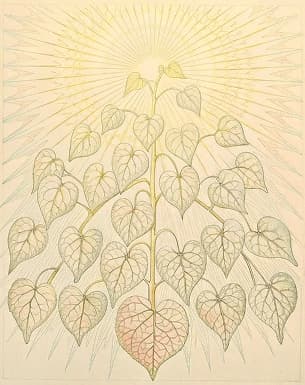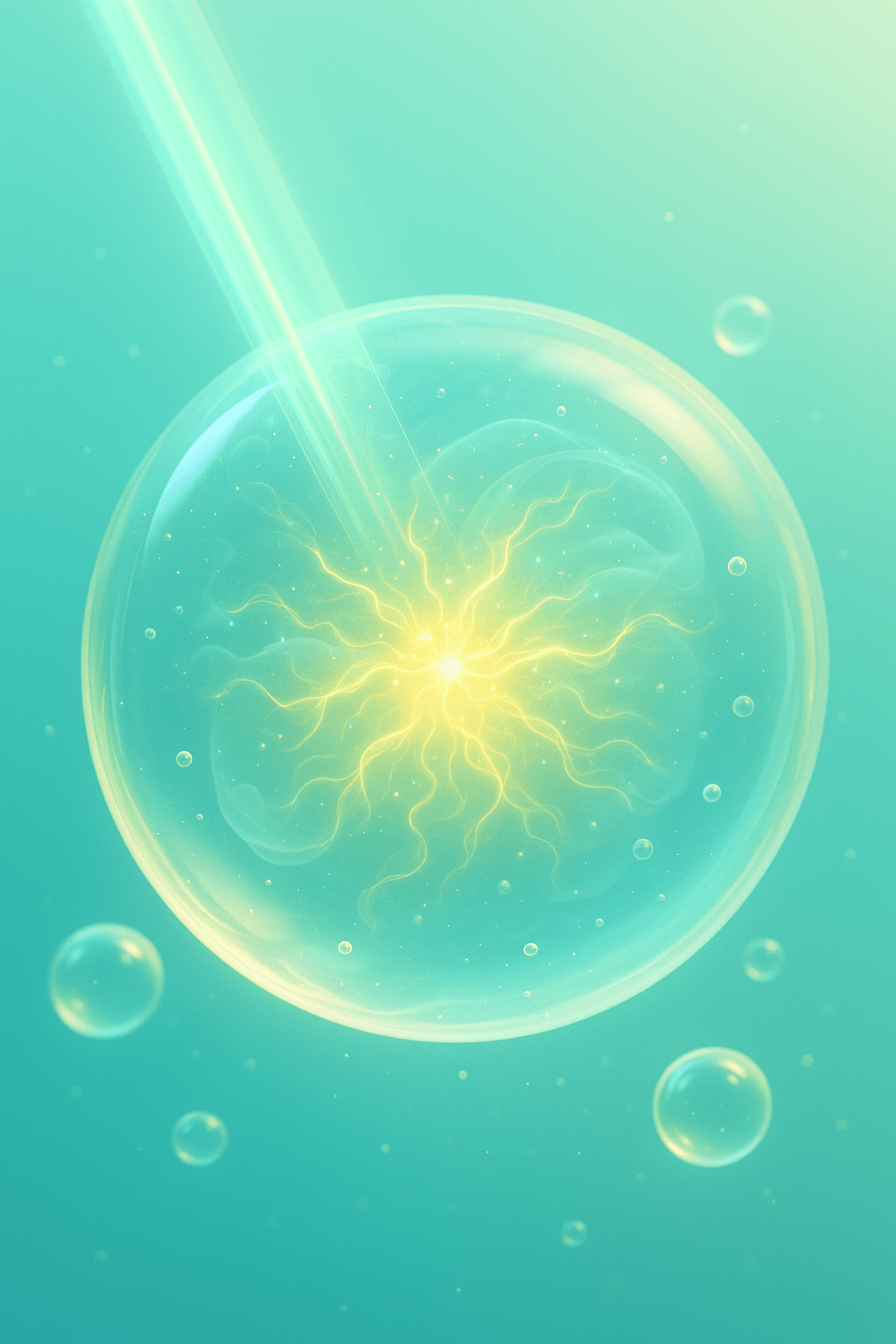
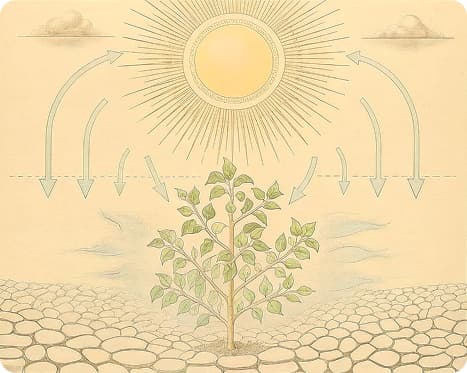
Photosynthesis is how plants live and grow. They absorb sunlight, water from the soil, and carbon dioxide from the air — and turn it all into energy.
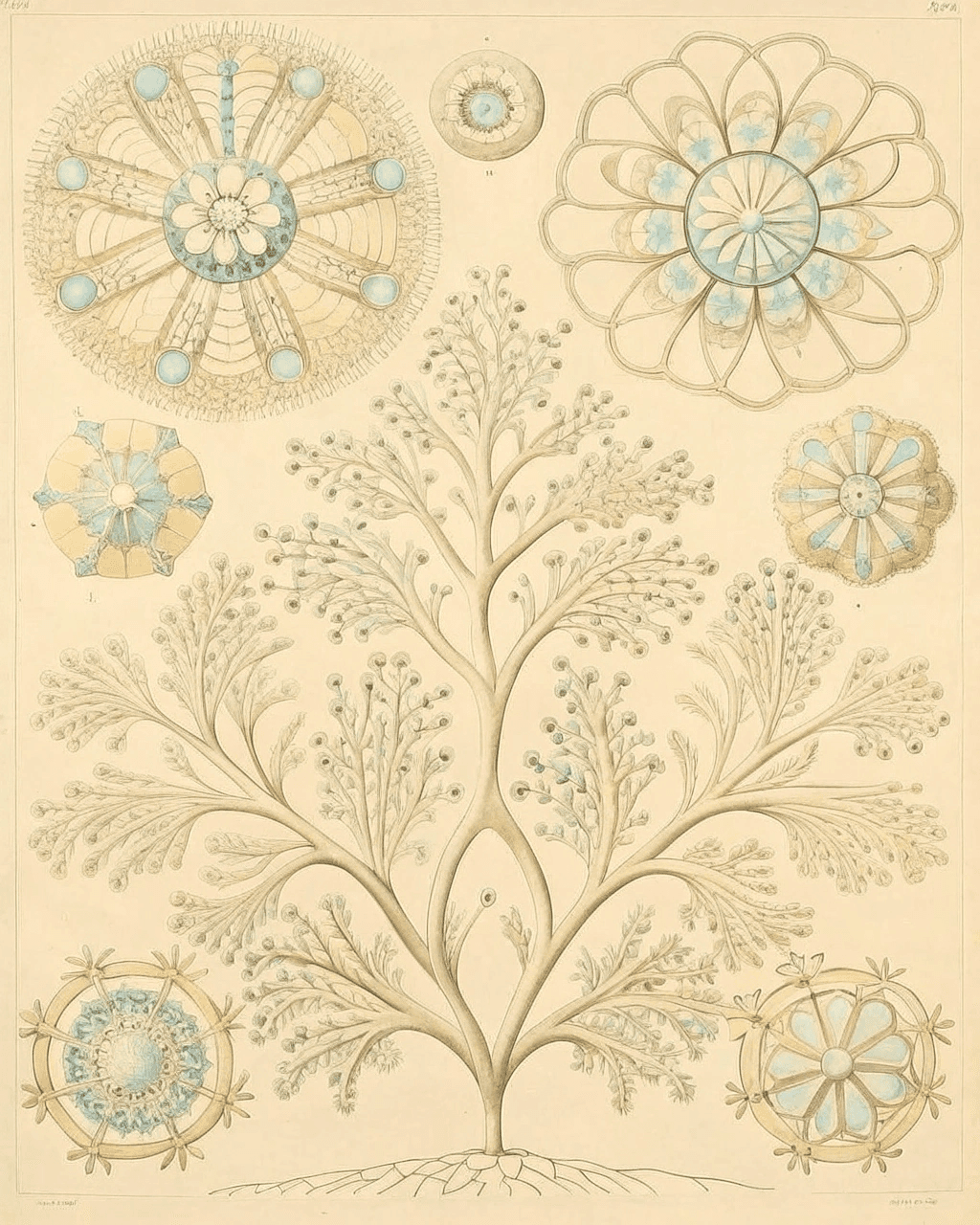
This energy — in the form of sugar — feeds the whole plant. In the process, they release oxygen — the one we breathe.

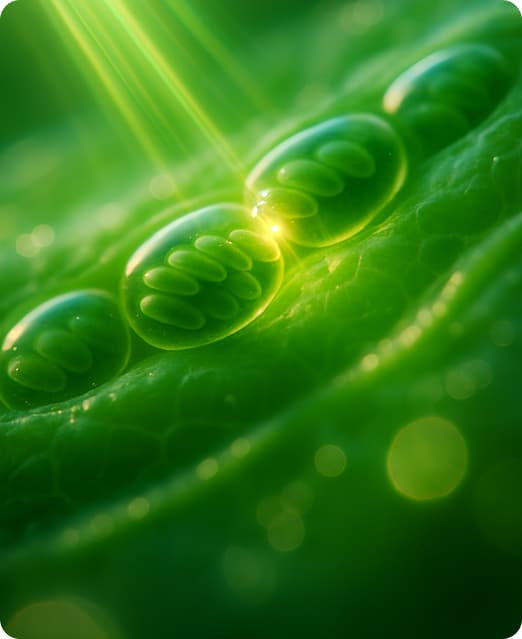
Each leaf contains thousands of microscopic structures — chloroplasts. Inside them: thylakoids where photons collide with electrons. It all starts in this invisible machinery


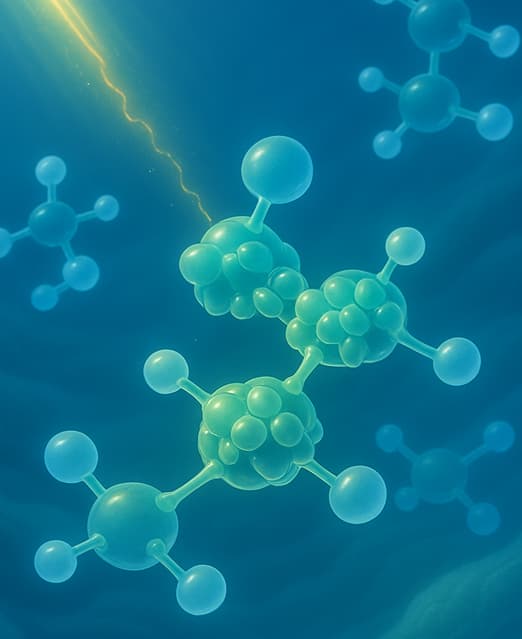
Sunlight is absorbed. Water molecules are split — oxygen is released, and energy is stored as ATP and NADPH.


Carbon dioxide is captured. Using the stored energy, glucose is built — one molecule at a time.

The sugar in fruit. The oxygen in your lungs. The starting point of every ecosystem
Provides energy. Too little — photosynthesis slows down. Too much — can damage the plant.
A key ingredient for making sugars. More CO₂ (up to a point) = faster photosynthesis.
Too cold — reactions slow. Too hot — enzymes stop working. Best range: around 25°C.
Needed to build chlorophyll and enzymes. Most important: magnesium, nitrogen, phosphorus.